
Pet Heat Safety
Pet Heat Safety
Heat Advisory for Our Shelter Pets
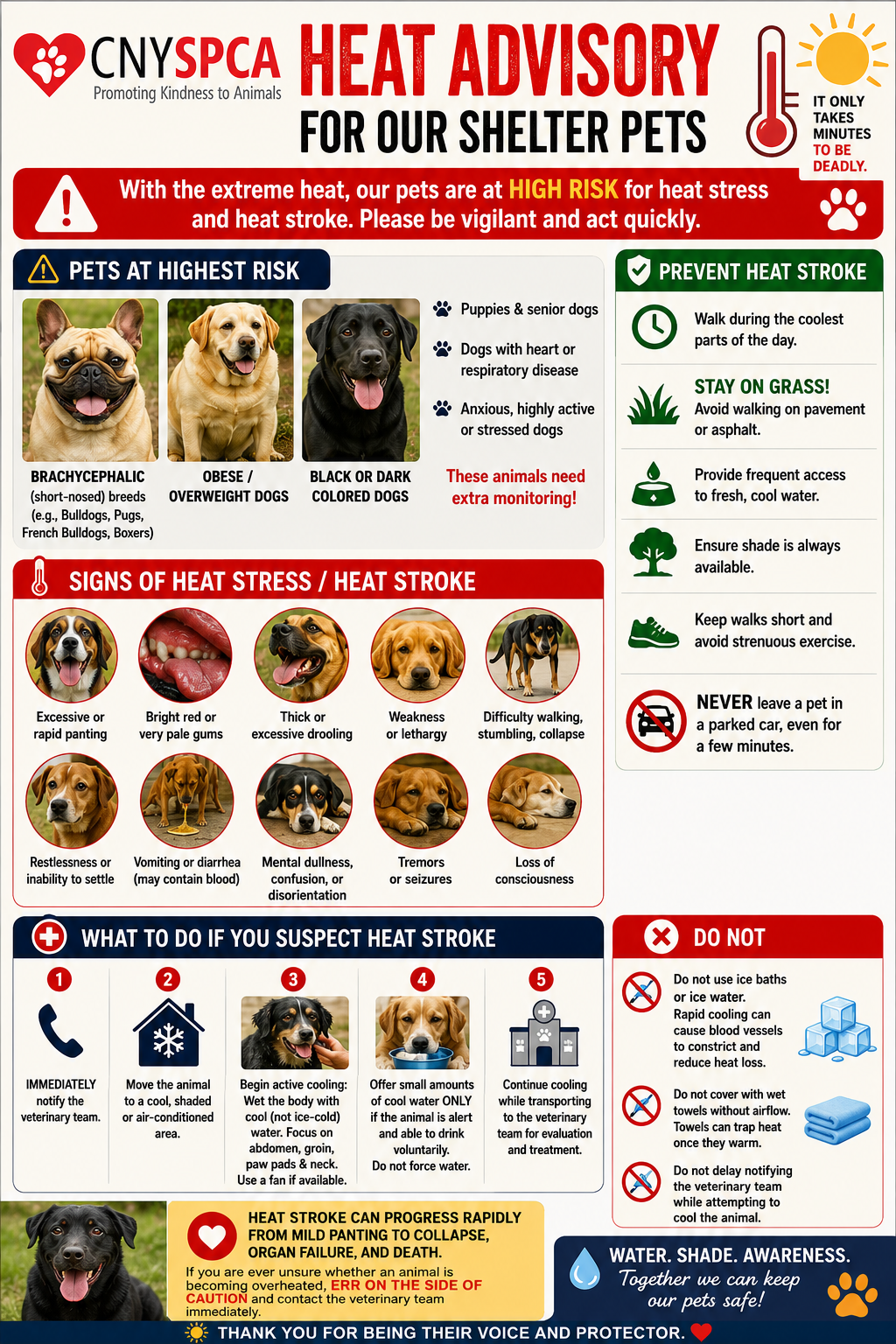
With the extreme heat, our pets are at high risk for heat stress and heat stroke. It only takes minutes to become deadly, so please be vigilant and act quickly.
Pets at highest risk
Some animals need extra monitoring in the heat:
Brachycephalic (short-nosed) breeds like Bulldogs, Pugs, French Bulldogs, and Boxers
Obese or overweight dogs
Black or dark colored dogs
Puppies and senior dogs
Dogs with heart or respiratory disease
Anxious, highly active, or stressed dogs
Signs of heat stress and heat stroke
Excessive or rapid panting
Bright red or very pale gums
Thick or excessive drooling
Weakness or lethargy
Difficulty walking, stumbling, or collapse
Restlessness or inability to settle
Vomiting or diarrhea (may contain blood)
Mental dullness, confusion, or disorientation
Tremors or seizures
Loss of consciousness
What to do if you suspect heat stroke
Immediately notify the veterinary team.
Move the animal to a cool, shaded, or air-conditioned area.
Begin active cooling. Wet the body with cool (not ice-cold) water, focusing on the abdomen, groin, paw pads, and neck. Use a fan if available.
Offer small amounts of cool water only if the animal is alert and able to drink voluntarily. Do not force water.
Continue cooling while transporting to the veterinary team for evaluation and treatment.
What not to do
Do not use ice baths or ice water. Rapid cooling can cause blood vessels to constrict and reduce heat loss.
Do not cover the animal with wet towels without airflow. Towels can trap heat once they warm.
Do not delay notifying the veterinary team while attempting to cool the animal.
How to prevent heat stroke
Walk during the coolest parts of the day.
Stay on grass. Avoid walking on pavement or asphalt.
Provide frequent access to fresh, cool water.
Make sure shade is always available.
Keep walks short and avoid strenuous exercise.
Never leave a pet in a parked car, even for a few minutes.
Heat stroke can progress rapidly from mild panting to collapse, organ failure, and death. If you're ever unsure whether an animal is overheating, err on the side of caution and contact the veterinary team immediately.
Water. Shade. Awareness. Together we can keep our pets safe. Thank you for being their voice and protector.